
How to Storyboard Video Content: 7 Pre-Production Blueprints That Cut Filming Time in Half
Winging it on camera leads to rambling scripts, endless reshoots, and bloated editing timelines. Master the 7 pre-production storyboarding blueprints and visual shot-listing frameworks that cut your filming time in half.
The 3-Column Pre-Production Script Template
Separating audio from visual cues prevents on-camera hesitation. Organize your script into a 3-column table detailing Timestamp/Shot Type, Visual Action/B-Roll, and Spoken Script.
Draft your script in a 3-column layout: Column 1: Shot Spec (Wide A-roll, Macro B-roll). Column 2: Visual Action on screen. Column 3: Exact spoken dialogue or voiceover.
Mapping the Emotional Narrative Arc and Retention Beats
Engaging educational videos mirror Hollywood storytelling principles: establish high-stakes tension, introduce complications, and deliver clear cathartic resolution.
Graph your video's 5 retention beats: 1) The Frustrating Obstacle, 2) The Flawed Common Approach, 3) The Breakthrough Shift, 4) The Step-by-Step Execution, 5) The Measurable Result.
Sketching Minimalist Thumbnail and Hook Concepts First
Never leave your video thumbnail as an afterthought after filming wraps. Design your packaging thumbnail and opening 5-second hook before writing a single word of your body script.
Sketch 3 thumbnail concepts and write 3 opening hook variations before filming; select the single most compelling pairing to anchor your script outline.
Building an Exhaustive B-Roll Shot List Before Production
Arriving at the editing timeline only to realize you forgot critical cutaway b-roll disrupts production. Compile a comprehensive shot list organized by physical camera angle and location.
Create a 15-item B-Roll Checklist categorized by setup: 5 Macro product shots, 5 Over-the-shoulder action shots, and 5 Wide contextual studio shots.
Digital Storyboarding Tools vs. Physical Whiteboard Index Cards
Physical index cards offer tactile flexibility: rearrange scenes, eliminate redundant steps, and visualize pacing shifts on a table before touching camera gear.
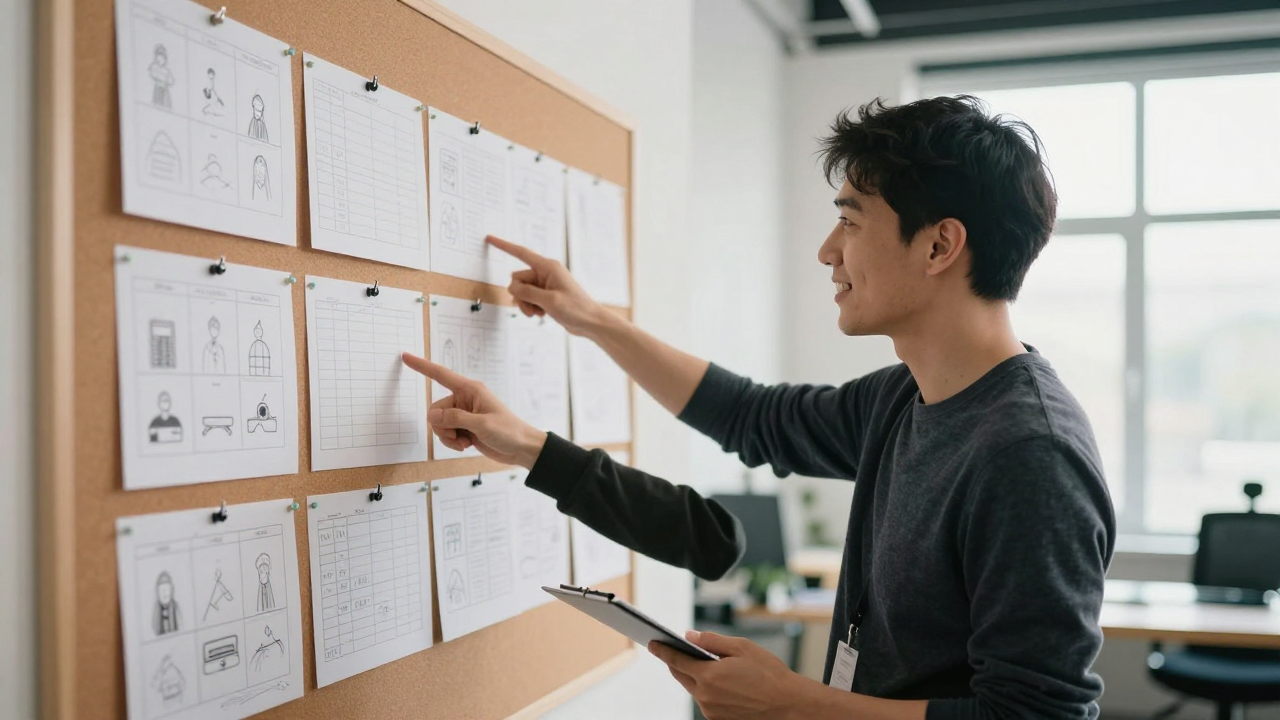
Write each major scene on a physical 3x5 index card; pin them to a studio corkboard, rearranging sequence order until the narrative flow feels effortless.
Rehearsing On-Camera Pacing with a Digital Teleprompter
Memorizing long technical explanations leads to stiff delivery. Use an eye-line teleprompter rig to maintain direct eye contact while delivering complex frameworks smoothly.
Mount an eye-line teleprompter over your camera lens; adjust scrolling speed to match a natural, conversational 130 words per minute speaking rate.
Translating Visual Storyboards into Tangible Physical Companion Kits
The ultimate realization of visual storyboarding is engineering physical learning companion kits that allow viewers to replicate your workflow in real time.
Partner with Peer Wright to turn your visual teaching frameworks into premium physical companion kits, earning 60% gross profit with $0 upfront investment.